
What is Paddleboarding?Paddleboarding, also known as stand-up paddleboarding (SUP), is a rapidly growing water sport that has swept the globe in popularity with its versatility and accessibility. Whether gliding across calm lakes, navigating rivers, or catching waves in the ocean, paddleboarding offers a unique blend of relaxation and physical exercise. But what is paddleboarding exactly, and why has it become so popular? This comprehensive guide explores the equipment, techniques, benefits, and the steps to get started in this engaging sport, ensuring that newcomers can confidently embark on their paddleboarding adventures. DEFINITION AND BASIC CONCEPT Paddleboarding is a water activity where participants stand on a large, buoyant board and use a long paddle to move through the water. Unlike traditional surfing, which relies on waves for movement, paddleboarding can be done on flat, calm waters, making it more accessible to a broader audience. It involves standing, kneeling, or even lying prone on a board while using a paddle to propel oneself through the water. It has become a popular activity due to its accessibility, fitness benefits, and the unique perspective it offers on water-based environments. HISTORY OF PADDLEBOARDING Paddleboarding has deep roots that trace back centuries, with its origins in ancient cultures. However, the modern form of stand-up paddleboarding (SUP) as we know it began in Hawaii in the early 20th century. Ancient Origins Evidence suggests that ancient cultures in Africa and South America used canoes and rafts propelled by paddles to navigate waterways. These early forms of paddleboarding were primarily for transportation and fishing. Hawaiian Beginnings The modern evolution of paddleboarding began in the 1940s and 1950s with the Waikiki Beach Boys in Hawaii. These surf instructors and lifeguards, including notable figures like Duke Kahanamoku and Leroy and Bobby AhChoy, used paddles while standing on their surfboards to manage large groups of beginner surfers and to take photographs of their students.  Olympian and surf legend Duke Kahanamoku Rise in Popularity The sport remained relatively niche until the early 2000s when it began gaining widespread attention. Influential surfers like Laird Hamilton and Dave Kalama started promoting stand-up paddleboarding as a way to stay in shape during periods of flat waves. They demonstrated the versatility of the sport, using it for both wave riding and flatwater paddling. Global Expansion Paddleboarding quickly spread from Hawaii to mainland USA, Europe, and beyond. Its accessibility and the minimal equipment required made it popular among water sports enthusiasts worldwide. The introduction of inflatable paddleboards further contributed to the sport's growth, making it easier to transport and store equipment. Today, paddleboarding is enjoyed by millions of people globally, with numerous competitions, events, and dedicated SUP communities. Its rich history and continuous evolution make it a fascinating and dynamic sport that appeals to a wide range of individuals. EQUIPMENT NEEDED FOR PADDLEBOARDING PADDLEBOARD: The board is typically larger and more stable than a traditional surfboard.
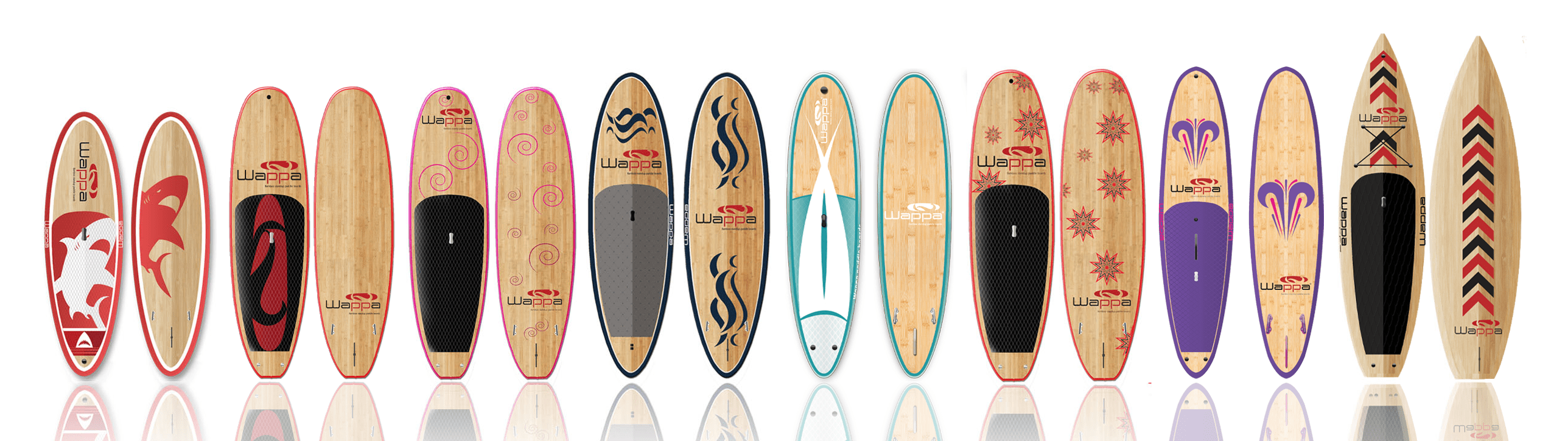 The different types of Wappa Paddle Boards: All Around, Wave, Touring and Wind PADDLE: A paddleboard paddle has a long shaft and a blade at one end. The paddle's length should be adjusted according to the user's height and the type of paddleboarding they are doing.
LEASH: A leash is an essential piece of safety equipment in paddleboarding, designed to keep the rider connected to their board.
PERSONAL FLOTATION DEVICE (PFD): Safety is paramount, and wearing a PFD is recommended, especially for beginners or when paddling in open water. TECHNIQUES AND STANCE
TYPES OF PADDLEBOARDING Recreational Paddleboarding: Ideal for beginners and casual enthusiasts, this involves leisurely paddling on calm waters, enjoying the scenery, and getting a light workout. Touring Paddleboarding: This type involves longer distances and exploring various water bodies. Touring boards are designed for stability and efficiency over long distances. Racing Paddleboarding: Competitive paddleboarding involves racing on specific courses or open water. Racing boards are designed for speed and agility. Surf Paddleboarding: This combines traditional surfing with paddleboarding, allowing riders to catch and ride waves using their paddles. Wind SUP: Wind SUP combines elements of windsurfing and paddleboarding. A sail is attached to a paddleboard, allowing the rider to use wind power for propulsion.  HEALTH BENEFITS OF PADDLEBOARDING Paddleboarding, or stand-up paddleboarding (SUP), offers a wide range of physical, mental, and social benefits. Here is a detailed look at these advantages: FULL-BODY WORKOUT
CARDIOVASCULAR HEALTH Paddleboarding can be a moderate to intense cardiovascular exercise, depending on the pace and duration of paddling. It helps improve heart health, increase endurance, and burn calories. IMPROVED BALANCE AND COORDINATION Regularly practicing paddleboarding enhances your balance and coordination skills. The need to stay stable on the moving water surface challenges and develops these abilities. MENTAL HEALTH BENEFITS
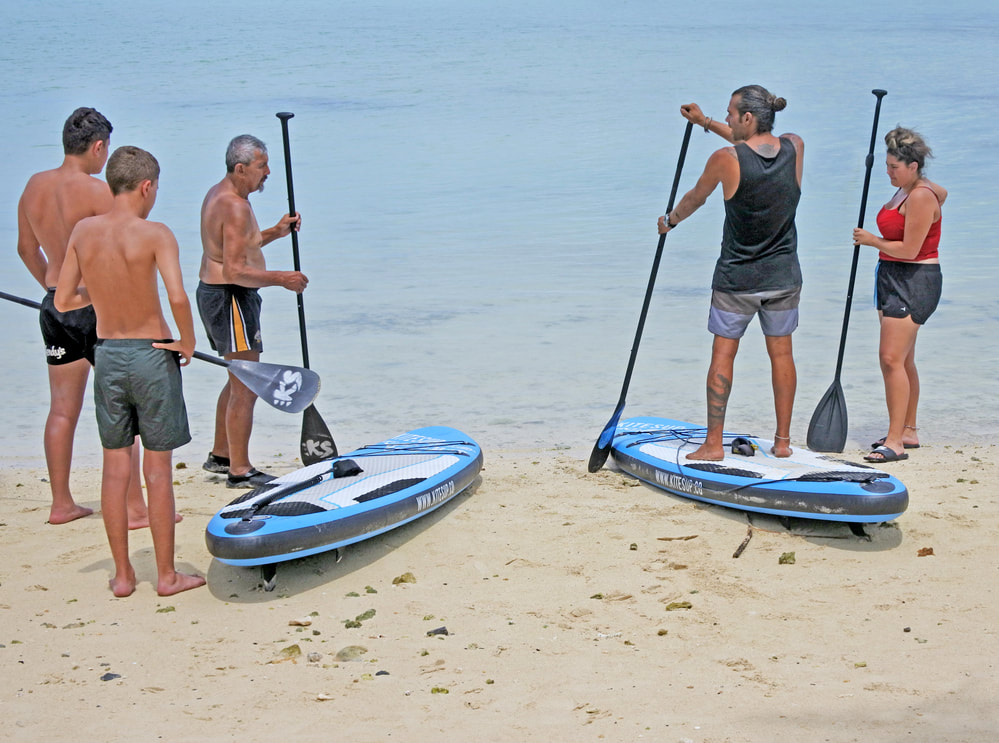 Beginners getting a lesson! GETTING STARTED WITH PADDLEBOARDING
TAKE A LESSON For beginners, taking a lesson from a certified instructor can be beneficial. They can provide essential tips on balance, paddling techniques, and safety.
FIND THE RIGHT LOCATION It's also crucial to learn how to paddleboard in the right environment. Start in calm, shallow waters that has easy entry into the water until you become more comfortable and confident on the board.
Paddleboarding is more than just a water sport; it's a full-body workout, a meditative experience, and a way to connect with nature and the community. Whether you’re asking, “what is paddleboarding?” out of curiosity or as a first step to diving into the sport, this guide provides a detailed roadmap to help you start your journey. From understanding the essential equipment and mastering basic techniques to appreciating the numerous physical and mental health benefits, paddleboarding offers something for everyone. Embrace the adventure, and let paddleboarding transform your time on the water into an enriching and exhilarating experience. Comments are closed.
|
have a question? 1-844-go-wappa (469-2772)
|
|
Company
shipping |
resources
board performance explained
board care & maintenance blog testimonials FAQ military discount great for families SUP for women want a deal? wholesale paddle boards RETAILERs / DISTRIBUTORS
|
|

|
|