WAPPA PADDLE BOARDS
  • Home
  • Our Bamboo SUPs
    • All Around
    • Wave
    • All Around / Wave
    • Touring
    • Wind SUP
  • Shop
  • Eco-Friendly
  • Bamboo Advantage
  • Technology
  • Wappa vs. Competition
  • Why Wappa?
  • 5 Year Warranty
  • Home
  • Our Bamboo SUPs
    • All Around
    • Wave
    • All Around / Wave
    • Touring
    • Wind SUP
  • Shop
  • Eco-Friendly
  • Bamboo Advantage
  • Technology
  • Wappa vs. Competition
  • Why Wappa?
  • 5 Year Warranty

The Best Paddle Board Blog

The Best Paddle Board Blog

Blog

Foam vs. Epoxy: Which is Better for Paddle Boards?

11/20/2023


Foam vs. Epoxy: Which is Better for Paddle Boards

Foam vs Epoxy Paddle Boards: A Detailed Comparison

Foam and epoxy are two prevalent materials in paddle board construction, each with distinct advantages and drawbacks. Understanding these materials' properties, from the density and weight of the foam used to the protective strength of epoxy, is key to selecting the right paddle board for your aquatic adventures.

FOAM PADDLE BOARDS
Foam is commonly used in the core of paddle boards. Its lightweight nature makes it an excellent choice for those seeking ease of handling and transportation. Foam boards are typically less expensive, making them accessible to beginners. However, they can lack the durability found in other materials and may not withstand rough conditions over time. In fact, foam paddle boards may not last more than one or two summers.
Pros:
  • Lightweight and easy to handle.
  • Generally more affordable.
  • Suitable for beginners on a tight budget.
Cons:
  • Less durable than epoxy.
  • Can be prone to dents and damage.
foam_vs_epoxy_paddle_boards_image
Foam Paddle Board with damage.
EPOXY PADDLE BOARDS
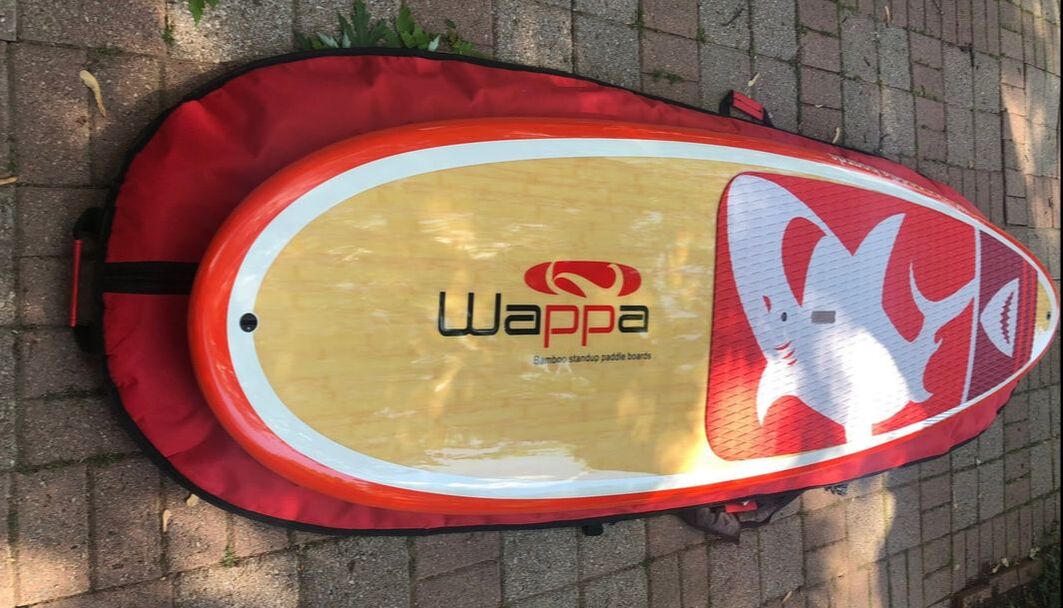
Epoxy paddle boards are known for their strength and durability. They are made by covering a foam core with epoxy resin, creating a hard, protective shell. This combination offers a balance between lightweight design and robustness, suitable for a wide range of conditions. Epoxy boards are favored by experienced paddlers for their performance and longevity. A great example of epoxy paddle boards is Wappa’s bamboo paddle boards which are made with a combination of bamboo and epoxy.
Pros:
  • Highly durable and resistant to damage.
  • Better performance in various water conditions.
  • Long-lasting, offering value over time.
Cons:
  • Typically more expensive than foam boards.
  • Heavier, which might be challenging for some users.
Epoxy_Bamboo_Paddle_Board
An Epoxy and Bamboo Paddle Board
COMMONLY USED PADDLE BOARD FOAMS
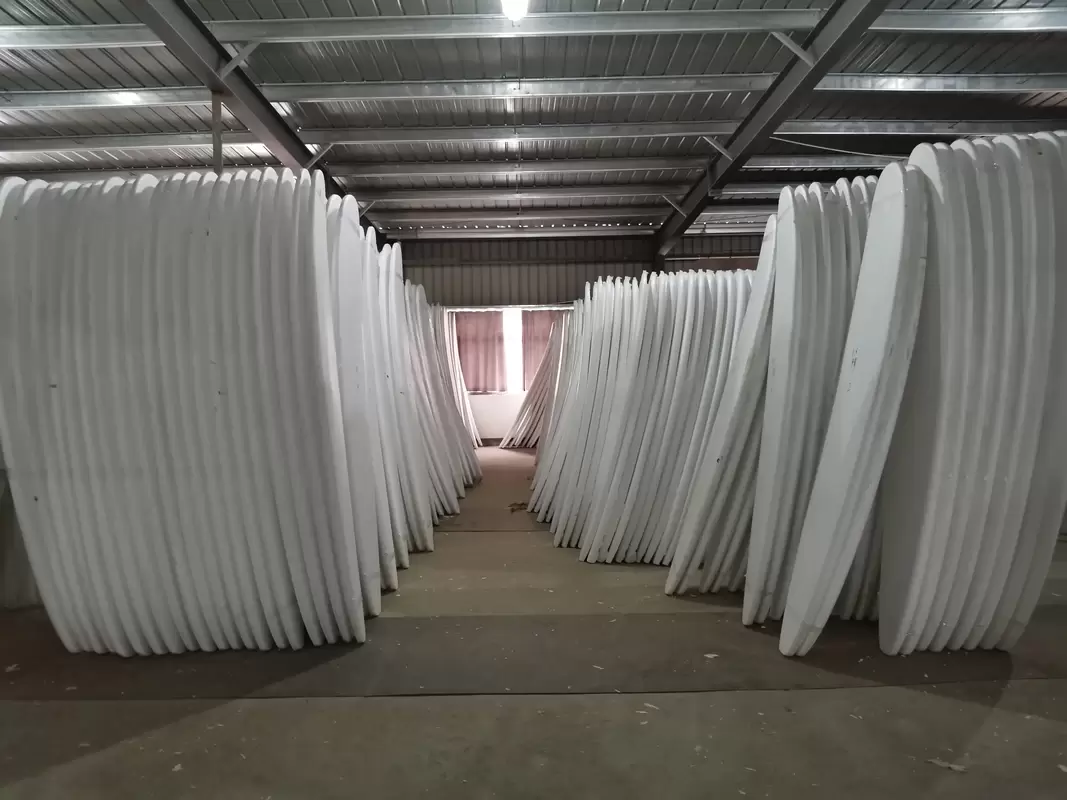
Foam is a key material in the construction of paddle boards, with different types offering various properties in terms of density, weight, and performance. Here's a detailed look at the types of foam commonly used in foam paddle boards:

Expanded Polystyrene Foam (EPS)

  • Density: EPS foam typically has a density ranging from 1 to 3 pounds per cubic foot. Higher density EPS is more durable and less prone to water absorption.
  • Weight: EPS is known for its lightweight nature, which contributes to the ease of handling and transportation of the board.
  • Characteristics: It's a rigid, closed-cell foam that offers good buoyancy. However, it can be prone to dings and cracks if not properly cared for.
  • Usage: EPS foam is often used in higher-quality boards and is usually covered with fiberglass and epoxy resin for added strength and durability.

Extruded Polystyrene Foam (XPS)
  • Density: XPS foam has a higher density compared to EPS, usually around 2 pounds per cubic foot or higher. This density makes it more durable and resistant to water absorption.
  • Weight: While still lightweight, XPS can be slightly heavier than EPS due to its denser composition.
  • Characteristics: XPS is known for its smooth surface and consistent texture. It offers better structural integrity and moisture resistance than EPS.
  • Usage: XPS is also used  paddle boards and is also covered with a layer of fiberglass and epoxy for enhanced durability.
Mass_Produced_foam_cores
DURABILITY: A KEY DIFFERENCE BETWEEN FOAM AND EPOXY BOARDS
The durability difference between foam and epoxy paddle boards is primarily due to their construction materials and methods. Foam boards are generally less durable than their epoxy counterparts for several reasons:

Material Composition and Density:
  • Foam Boards: Foam paddle boards are often made with a core of expanded polystyrene (EPS) or extruded polystyrene (XPS). These materials are lightweight and buoyant but have a lower density compared to epoxy. Lower density means the material is more porous and susceptible to pressure dents, cracks, and water absorption if the outer layer is damaged.
  • Epoxy Boards: Epoxy paddle boards typically have a foam core (often EPS) but are coated with a layer of epoxy resin reinforced with fiberglass or other materials. This epoxy layer significantly increases the board's resistance to impacts, dents, and water damage.

Structural Integrity:
  • Foam Boards: Without a hard protective shell, foam boards are more prone to damage from impacts, such as bumps against rocks or dropping the board. They can sustain dents and cracks more easily, which can compromise the board’s integrity over time.
  • Epoxy Boards: The epoxy resin coating creates a hard, durable surface that offers greater protection against physical impacts. This makes them more suitable for rougher conditions and less likely to sustain damage from everyday use.

Water Resistance:
  • Foam Boards: If the outer layer of a foam board is compromised, water can easily penetrate the foam core. Water absorption not only adds weight but can also lead to the breakdown of the foam structure, reducing buoyancy and lifespan.
  • Epoxy Boards: The epoxy layer provides an excellent barrier against water ingress. Even if the surface is scratched or slightly damaged, the epoxy resin generally prevents water from seeping into the foam core.

Wear and Tear Over Time:
  • Foam Boards: Continuous exposure to the sun, salt water, and physical stresses can degrade foam more rapidly than epoxy. Over time, foam boards may lose their shape, buoyancy, and structural integrity.
  • Epoxy Boards: The materials used in epoxy boards are more resistant to UV rays and saltwater corrosion. They maintain their shape and structural qualities for a longer period, making them a more durable choice for frequent use.

Repairability:
  • Foam Boards: While minor damages in foam boards can be repaired, significant damages are often harder to fix effectively, leading to shorter board lifespans.
  • Epoxy Boards: Epoxy boards are generally easier to repair. Small cracks or dings can be patched up with resin, restoring the board’s integrity.
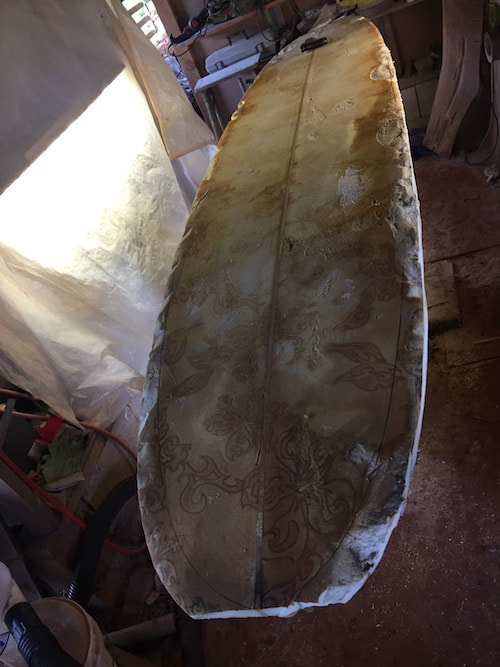
Picture
A great example of a waterlogged foam board
PRICE DIFFERENCE
The price difference between foam and epoxy paddle boards can be significant, influenced by factors like brand, size, design, and additional features. Here's a general overview:

Foam Paddle Boards:
  • Foam boards are typically more affordable, making them a popular choice for beginners or those on a budget.
  • Prices for basic foam paddle boards start from around $300 to $500.
  • Higher-end foam boards, which may offer additional features or better-quality foam, can cost up to $800.

Epoxy Paddle Boards:
  • Epoxy paddle boards are generally more expensive due to their durability, performance, and the materials used.
  • Entry-level epoxy boards usually start at about $700 to $900.
  • Mid-range and high-end epoxy boards, often favored by experienced paddlers or those seeking specific performance features, can range from $1,000 to over $2,000.

Factors Contributing to Price Differences:
  • Materials and Construction: Epoxy boards involve more complex construction processes with materials like fiberglass and epoxy resin, adding to the cost.
  • Durability: The longer lifespan and higher durability of epoxy boards often justify their higher price.
  • Performance: Epoxy boards typically offer better performance in terms of stability, maneuverability, and speed, appealing to more serious enthusiasts or professionals.
  • Brand and Extras: Established brands with reputations for quality can command higher prices. Additional features like specialized fins, advanced board shapes, and aesthetic designs also contribute to higher costs.

Overall Price Considerations:
  • While foam boards are more budget-friendly, their lower durability might lead to earlier replacement or repair costs.
  • Epoxy boards, despite the higher initial investment, can offer better value over time due to their longevity and performance.
 
In the world of paddle boarding, the decision between foam and epoxy boards hinges on a balance of factors like cost, durability, and intended use. Foam boards, with their lightweight design and lower cost, are ideal for newcomers to the sport or those seeking a budget-friendly option. Epoxy boards, while commanding a higher price, stand out for their longevity and enhanced performance, making them a worthwhile investment for serious enthusiasts or frequent paddlers. Additionally, considering the technical aspects, such as foam density and the protective qualities of epoxy, the choice is clear. Epoxy paddle boards are the superior option.

Comments are closed.

have a question?  1-844-go-wappa (469-2772) 

Company

10 year celebration deal
about
warranty
return policy
terms of service
privacy policy
all prices USD

shipping

shipping
tracking
receiving

CANADIAN SHOPPERS

Canadian money at par

resources

board performance explained
board care & maintenance
blog
testimonials
FAQ
military discount
the best family SUP
paddle boards for women
cheap paddle board alternative
wholesale paddle boards

RETAILERs / DISTRIBUTORS

become a retailer
find a retailer
become a distributor

Contact            

[email protected]
toll free: 1-844-469-2772
contact

AMBASSADOR PROGRAM

become a Wappa ambassador
terms and conditions

CUSTOM PROGRAM

overview
for organizations
for individuals
get a quote
order a custom SUP

OUR MISSION

Our mission is to provide our customers with the world's best bamboo stand up paddle boards, build them as  environmentally friendly as possible, and in doing so, exceed their expectations for service, quality and value.

ECOLOGICAL STATEMENT

We will decrease our environmental footprint by using renewable energy in our factory. We utilize sustainable materials when building our products and eco friendly construction techniques to reduce the amount of material required to make them. We will continually work towards recycling 100% of our factory waste. ​
Picture

ENVIRONMENTAL ORGANIZATIONS wappa SUPPORTs

Picture
Picture