WAPPA PADDLE BOARDS
  • Home
  • Our Bamboo SUPs
    • All Around
    • Wave
    • All Around / Wave
    • Touring
    • Wind SUP
  • Shop
  • Eco-Friendly
  • Bamboo Advantage
  • Technology
  • Wappa vs. Competition
  • Why Wappa?
  • 5 Year Warranty
  • Home
  • Our Bamboo SUPs
    • All Around
    • Wave
    • All Around / Wave
    • Touring
    • Wind SUP
  • Shop
  • Eco-Friendly
  • Bamboo Advantage
  • Technology
  • Wappa vs. Competition
  • Why Wappa?
  • 5 Year Warranty

The Best Paddle Board Blog

The Best Paddle Board Blog

Blog

Are Carbon Fiber SUP Paddles Worth It?

1/23/2024


Are Carbon Fiber SUP Paddles Worth It?

In the world of stand-up paddleboarding (SUP), the choice of SUP paddle can significantly impact your experience on the water. the material from which SUP paddles are made plays a pivotal role in the overall experience. This article delves into a comprehensive comparison of the three most common materials used in SUP paddles: carbon fiber, aluminum, and plastic. Each material offers distinct advantages and disadvantages in terms of performance, durability, and cost. Understanding these differences is key for paddlers to make an informed purchase decision.
 
CARBON FIBER VS. ALUMINUM AND PLASTIC SUP PADDLES
The most common materials for SUP paddles are carbon fiber, aluminum, and plastic. Each material offers different benefits and drawbacks, and understanding these can help paddlers make an informed decision. Here's a detailed comparison:

CARBON FIBER PADDLES
Advantages
  1. Lightweight: Carbon fiber paddles are significantly lighter than their aluminum and plastic counterparts, reducing arm fatigue and allowing for longer, more enjoyable paddling sessions.
  2. Strength and Rigidity: They provide excellent energy transfer with each stroke, thanks to their stiffness. This rigidity enhances paddling efficiency and maneuverability.
  3. Durability: Carbon fiber is resistant to corrosion and can endure rough handling, making it a long-lasting choice.
  4. Customization and Comfort: Many carbon fiber paddles offer adjustable lengths and ergonomic grips, catering to a wide range of paddlers.
  5. Aesthetics: They often feature sleek, professional designs that appeal to many paddlers.

Disadvantages
  1. Cost: The primary drawback is the higher price point, making it a significant investment.

ALUMINUM PADDLES
Advantages
  1. Affordability: Aluminum paddles are much more budget-friendly, making them a popular choice for beginners or those not wishing to invest heavily.
  2. Durability: They are quite durable, though not as corrosion-resistant as carbon fiber.

Disadvantages
  1. Weight: Aluminum paddles are heavier, which can lead to quicker fatigue during paddling.
  2. Performance: They are less efficient in energy transfer compared to carbon fiber, as aluminum can flex slightly during paddling.
  3. Comfort: Often, they lack the ergonomic designs and adjustable features found in higher-end carbon fiber paddles.
  4. Temperature Sensitivity: Aluminum can become very cold or hot to the touch, depending on the weather.
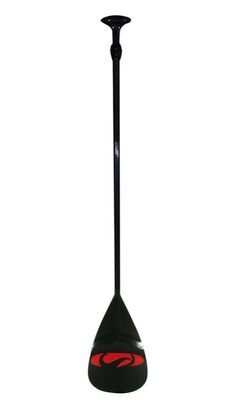
Wappa_Carbon_Fiber_SUP_Paddle
WAPPA CARBON FIBER SHAFT & BLADE
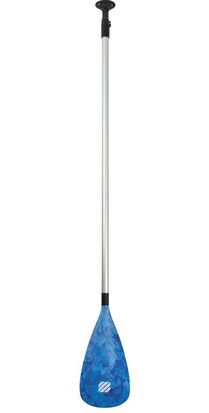
Aluminum_SUP_Paddle
ALUMINUM SHAFT & PLASTIC BLADE
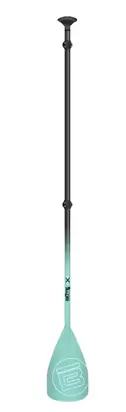
Plastic_SUP_Paddle
PLASTIC SHAFT & PLASTIC BLADE
PLASTIC PADDLES
Advantages
  1. Cost-Effective: Plastic paddles are the most affordable, making them accessible for casual or beginner paddlers.
  2. Durability: They are resistant to impact and are a good choice for paddling in rocky or shallow areas where paddles might hit obstacles.

Disadvantages
  1. Weight: Like aluminum, plastic paddles are heavier, which can be a drawback during longer paddling sessions.
  2. Performance: Plastic paddles are the least efficient in terms of energy transfer due to their flexibility.
  3. Longevity: They may degrade faster than aluminum or carbon fiber paddles, especially when exposed to UV light.
  4. Limited Customization: Plastic paddles often come with fewer options for adjustability and ergonomic comfort.

Conclusion
When choosing between carbon fiber, aluminum, and plastic SUP paddles, it comes down to a balance between performance, comfort, durability, and cost.
  • Carbon fiber paddles stand out for their superior performance, lightweight design, and long-term durability, but at a higher cost.
  • Aluminum paddles offer a middle ground in terms of cost and durability but fall short in performance and comfort.
  • Plastic paddles are the most affordable and durable in rough conditions but are the heaviest and least efficient.

The most notable advantage of carbon fiber paddles is their lightweight nature. Carbon fiber, a material known for its strength-to-weight ratio, allows for the creation of paddles that are not only strong but also incredibly light. This reduction in weight translates directly into less fatigue for the paddler, enabling longer and more enjoyable outings. The energy saved with each stroke due to the lightness of the paddle can make a significant difference, especially during long paddling sessions or when navigating challenging waters.

For serious or frequent paddlers, the investment in a carbon fiber paddle can be well worth it for the enhanced experience and performance. However, for beginners, casual paddlers, or those on a tight budget, aluminum or plastic paddles may be more appropriate choices.
paddle_board_racers

ENHANCED PERFORMANCE OF CARBON FIBER IN SUP PADDLES COMPARED TO ALUMINUM AND PLASTIC

When evaluating the performance of SUP paddles, the material composition plays a crucial role. Carbon fiber, aluminum, and plastic each have unique properties that affect their performance in paddleboarding. Here's a deeper dive into how carbon fiber enhances performance compared to aluminum and plastic.

CARBON FIBER PADDLES
  1. Energy Transfer and Efficiency: Carbon fiber's superior stiffness ensures that more of the paddler's energy is transferred directly to the water with each stroke. This efficiency means that paddlers can achieve greater speed and acceleration with less effort compared to using aluminum or plastic paddles.
  2. Responsiveness: The rigidity of carbon fiber allows for immediate and precise responses to paddler inputs. This responsiveness is crucial for quick maneuvering, making carbon fiber paddles ideal for competitive paddling or in situations requiring precise control.
  3. Vibration Dampening: Despite its stiffness, carbon fiber has excellent vibration dampening properties. This feature reduces the amount of shock transmitted to the paddler's hands and arms, enhancing comfort, especially over long distances.

ALUMINUM PADDLES
  1. Flexibility and Energy Loss: Aluminum paddles, while sturdier than plastic, tend to have more flex. This flexibility can lead to a loss of energy transfer, making strokes less efficient. Paddlers might need to exert more effort to achieve the same propulsion they would get with a carbon fiber paddle.
  2. Weight and Fatigue: Aluminum is heavier than carbon fiber. This increased weight can lead to quicker arm and shoulder fatigue, particularly on longer paddling trips or in situations where rapid, repetitive strokes are required.
  3. Temperature Conductivity: Aluminum conducts temperature, making it uncomfortable in extreme weather conditions. It can feel very cold in winter or hot in summer, potentially affecting grip and comfort.

PLASTIC PADDLES
  1. Significant Flex and Reduced Efficiency: Plastic paddles are the least efficient in terms of energy transfer due to their high flexibility. This flex means that a significant portion of the paddler's energy is lost in bending the paddle rather than moving the board forward.
  2. Durability vs. Performance Trade-off: While plastic paddles are durable and can withstand impacts, this durability comes at the cost of performance. They are typically the heaviest and least responsive option, which can be a significant drawback for more experienced paddlers.
  3. Limited Precision: The inherent flexibility of plastic makes these paddles less suitable for precise maneuvers. They are more challenging to use effectively in technical paddling situations or where quick, responsive strokes are necessary.

Conclusion
In comparison to aluminum and plastic, carbon fiber paddles offer a significant performance advantage in SUP. Their lightweight nature, coupled with exceptional stiffness, allows for efficient energy transfer, responsiveness, and comfort. While aluminum and plastic paddles have their own set of advantages, particularly in terms of cost and durability, they fall short in providing the enhanced performance that carbon fiber paddles offer. For serious paddlers or those looking to maximize their efficiency and control on the water, carbon fiber is the clear choice.
Broken_SUP_Paddle
This broken SUP paddle had a fiberglass blade and plastic shaft. It ruined a day of paddle surfing.
DURABILITY AND LONGEVITY: COMPARING CARBON FIBER, ALUMINUM, AND PLASTIC SUP PADDLES
When it comes to the durability and longevity of SUP paddles, the material composition is a key factor that determines how well a paddle will hold up over time and under various conditions. Let's expand on how carbon fiber, aluminum, and plastic paddles compare in terms of durability and longevity.

CARBON FIBER PADDLES

  1. Resistance to Corrosion and Weathering: Carbon fiber is highly resistant to corrosion, making it an excellent choice for use in both freshwater and saltwater environments. Unlike some metals, it doesn't rust or corrode over time.
  2. Structural Integrity: The strength of carbon fiber ensures that it maintains its integrity even after extensive use. It doesn't warp or deform easily, which is crucial for maintaining performance over time.
  3. UV Resistance: Carbon fiber paddles are generally resistant to UV damage, meaning they are less likely to degrade or weaken when exposed to sunlight over long periods.
  4. Impact Resistance: While carbon fiber is strong, it can be less forgiving than plastic when subjected to hard impacts, such as hitting rocks. However, high-quality carbon fiber paddles are designed to withstand typical use and minor impacts without significant damage.

ALUMINUM PADDLES

  1. Robustness and Impact Resistance: Aluminum paddles are known for their robustness. They can withstand a good deal of abuse, including impacts that might damage or break less sturdy materials.
  2. Vulnerability to Corrosion: One of the downsides of aluminum is its susceptibility to corrosion, especially when regularly used in saltwater. This corrosion can weaken the paddle over time and may require more maintenance to prolong its life.
  3. Weight and Durability Trade-off: Aluminum’s weight can be a disadvantage, but it contributes to its durability. The material's density makes it less likely to snap or break under pressure.

PLASTIC PADDLES

  1. High Impact Resistance: Plastic paddles excel in their ability to withstand impacts. They are less likely to crack or break when hitting rocks or being dropped, making them ideal for beginners or for use in rough, shallow waters.
  2. Degradation Over Time: The major drawback of plastic is its tendency to degrade, especially when exposed to UV radiation. Prolonged exposure to sunlight can make plastic brittle, leading to cracks and weakening over time.
  3. Flexibility and Wear: Plastic paddles may bend or warp over time, especially in warmer climates. This flexibility can lead to a decrease in performance and may require replacement more frequently than other materials.

Conclusion

In terms of durability and longevity, each material has its strengths and weaknesses:
  • Carbon Fiber offers the best balance between durability, resistance to environmental factors, and maintaining structural integrity, but may be more vulnerable to hard impacts.
  • Aluminum provides good impact resistance and robustness, but its susceptibility to corrosion can be a limiting factor, especially in saltwater environments.
  • Plastic stands out for its impact resistance and is the most forgiving when mishandled, but it falls short in terms of resistance to environmental degradation and maintaining its shape over time.

While carbon fiber paddles might come with a higher initial cost, their durability makes them a wise long-term investment. Carbon fiber is resistant to corrosion, meaning it doesn’t suffer from the wear and tear that metal or wooden paddles do, especially in saltwater conditions. These paddles can withstand significant use and abuse, often outlasting cheaper alternatives. This durability ensures that the paddle will remain a reliable companion for numerous paddle boarding adventures.

In summary, when considering all factors essential for an optimal stand-up paddle boarding experience, carbon fiber SUP paddles emerge as the clear front-runner. Despite the higher initial investment, the unparalleled advantages they offer in terms of performance, durability, and overall paddling experience make them a wise and rewarding choice for any serious paddler.

The lightweight nature of carbon fiber dramatically enhances paddling efficiency, significantly reducing fatigue and allowing for longer, more enjoyable sessions on the water. The superior stiffness and strength of this material translate into exceptional energy transfer and stroke efficiency, ensuring that each paddle movement is maximized for speed and control.

For paddlers seeking the best possible experience on the water, investing in a carbon fiber paddle is undoubtedly the best decision. It's not just about purchasing a piece of equipment; it's about investing in an enhanced paddling experience that offers the perfect blend of efficiency, durability, and enjoyment. The decision to choose carbon fiber is a decision to elevate your stand-up paddle boarding to the highest level.

Comments are closed.

have a question?  1-844-go-wappa (469-2772) 

Company

10 year celebration deal
about
warranty
return policy
terms of service
privacy policy
all prices USD

shipping

shipping
tracking
receiving

CANADIAN SHOPPERS

Canadian money at par

resources

board performance explained
board care & maintenance
blog
testimonials
FAQ
military discount
the best family SUP
paddle boards for women
cheap paddle board alternative
wholesale paddle boards

RETAILERs / DISTRIBUTORS

become a retailer
find a retailer
become a distributor

Contact            

[email protected]
toll free: 1-844-469-2772
contact

AMBASSADOR PROGRAM

become a Wappa ambassador
terms and conditions

CUSTOM PROGRAM

overview
for organizations
for individuals
get a quote
order a custom SUP

OUR MISSION

Our mission is to provide our customers with the world's best bamboo stand up paddle boards, build them as  environmentally friendly as possible, and in doing so, exceed their expectations for service, quality and value.

ECOLOGICAL STATEMENT

We will decrease our environmental footprint by using renewable energy in our factory. We utilize sustainable materials when building our products and eco friendly construction techniques to reduce the amount of material required to make them. We will continually work towards recycling 100% of our factory waste. ​
Picture

ENVIRONMENTAL ORGANIZATIONS wappa SUPPORTs

Picture
Picture